Alchemy

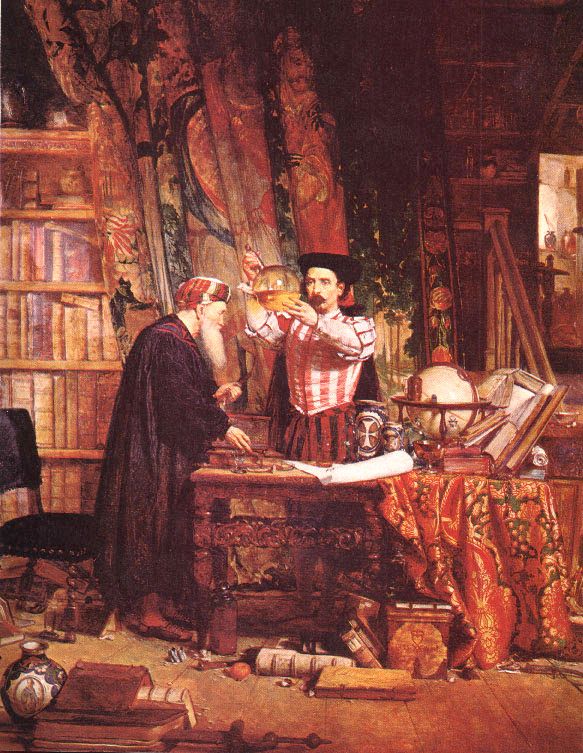
William Fettes Douglas - The Alchemist

When we hear the word ‘alchemy’ we probably think of chemists trying to turn simple metals into gold during the Middle Ages and the Renaissance. But, in truth, alchemy has a fascinating history. Dating back to centuries BC, many famous people, including Einstein, have studied this subject. Alchemy or transmutation (a modern word for alchemy) is more common than we think. It occurs in the physical world and in the metaphysical realm of the transcendental.

We are all aware of nuclear alchemy (transmutation) when radioactive elements, because of their unstable nuclei, literally change into different elements. One way is through alpha decay – or the loss of 2 protons and 2 neutrons. You see, it the number of protons in the nucleus of any atom that identifies what that element is. The number of protons is the ‘DNA,’ so to speak, of that element. So, for example, Radium will become Radon. Lately, however, I’ve been drawn to the deeper meanings of alchemy.

Alchemy for people can happen in an interesting variety of ways. Sometimes the change is sudden. Something unexpected, usually unpleasant, happens and we are changed forever. Some who have experienced NDEs find that their approach to life changes. They can never look at anything in the same way ever again. They disregard the scientific need for proof, because as far as they are concerned they have all the proof they need – their own direct experience. And that direct experience has brought them closer to understanding their own true nature.
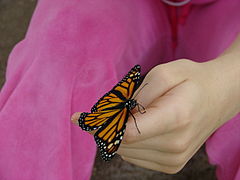
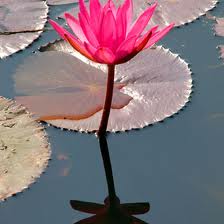
photo by cincooldesigns

A more gradual experience of alchemy includes those with a spiritual practice. They understand this process of change as they undergo their own metamorphosis leaving the chrysalis of their ego behind to embrace a freer, truer experience of Self.

I feel humanity is on the brink of alchemical change. There is no doubt that life on this planet today is changing  – at its very core. The old paradigms do not work anymore and even though massive efforts are being made to keep the world as it has been, it is becoming more and more clear that these efforts are futile. We are jumping down the rabbit hole. We have taken the red pill. And nothing will ever be the same again.

So, it’s time we release any notion or attachment we have about how things ‘should’ be. It’s time to release outdated notions or attachments about who we think we are. There is an old saying in the metaphysical genre, “We are not human beings having spiritual experiences, we are spiritual beings having human experiences.” As we break free of the limiting structures of ignorance that encase and enslave our egos, alchemy begins.

So release the old patterns, habits, and thoughts. Free your mind.
Free Will….Part Two: Go With The Flow

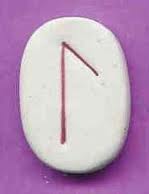
Laguz - Rune meaning "Flow"

In my first posting of the question of free will, I talk about how, as students of non-duality, we are taught that we cannot be the doer of anything. Some points previously made:

  • Spiritual and religious traditions stress the notion that everything that happens is a result of the will of God.
  • It seems that it is only when we think we can’t ‘do’ anything about a situation do we relinquish our imagined control.
  • We do have the free will to choose where to put our awareness (attention).

This suggests that events in our lives (or the world) happen exactly the way they’re supposed to happen. Which, taken a step further, suggests that the future is set. That said, let’s indulge our ego’s need to analyze and dig a little deeper into the idea that everything happens just as it’s supposed to. If people on some level didn’t already believe this, nobody would be interested in consulting psychics. People go to them in order to know what is going to happen – doesn’t that suggest that they think the future just might be set? So what does free will have to do with anything? How can we separate free will and predetermination? That’s like saying, “I choose what I’m having for dinner, but the trip to Europe that the psychic saw is predestined.”

When we pay attention to the present moment and accept that moment and not let our awareness dwell on the past or worry about the future, we go with the flow. I know, I know – easier said than done. I have found that everyone has his or her own threshold of pain. Eventually we get tired of beating our heads against a wall by trying to control everything in our lives, and once we sit back exhausted, we throw up our hands and say, “Whatever….” That’s when we surrender to ‘what is’ and go with the flow. But honestly – it doesn’t have to be so painful.

Years ago, during a particularly difficult time in my life, I was obsessed with the need to make things happen a certain way. And of course, nothing (and I mean nothing) was happening the way I wanted it to during that period. I was tense, nervous and miserable most of the time. Finally, a friend told me, “You’re not flowing. You need to learn how to flow.” I resisted, not having a clue on how to do that. It happened that I recently had purchased a set of Runes. For those unfamiliar with the Runes, they are a set of stones carved with letters of Scandinavian origin and intended to be used, not so much for divination, but as guidance for the Spiritual Warrior. I can’t remember why, but I checked all of the Runes in the set and noticed that one was missing. The missing Rune was the one meaning “Flow.”

Not quite a watershed moment but a useful and interesting one for me, since my  awareness in that moment did expand beyond the horizon of my mundane life, serving to remind me of the bigger picture. Perhaps if we can do that, not just in challenging situations but everyday ones, remember that we are a part of an interconnected Whole and not apart from that Whole, going with the flow will become an easier and even natural way to live.

The Eve of Destruction…of Fear!

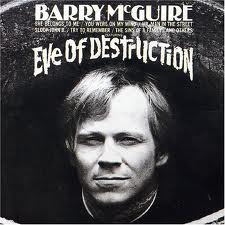
Barry McGuire sang the iconic song, The Eve of Destruction, in 1965, two years after the Kennedy assassination, when we were immersed in Vietnam and civil rights, and three years before the assassinations of Martin Luther King and Robert Kennedy.  The 60’s were a decade of change, turmoil and fear – sound familiar?

I think back about how we were all manipulated by fear back then, especially during the Cuban missile crisis: fear of the Russians, fear of the bomb. I remember, as school children, the completely ridiculous ‘duck and cover’ exercises we were forced to practice. I remember being out in the schoolyard and being fearful of every plane that flew overhead; afraid that it was the Russians coming to drop the bomb on us.  And we didn’t even have 24-hour news networks with nonstop talking heads telling us who to fear, how afraid we should be, and who was to blame for not keeping us ‘safe.’ To their credit, TV news anchors and journalists back in the ‘60’s behaved with much more dignity and impartiality than what we see today, and yes, the Cuban missile crisis was a difficult time, but fear still sells ratings and so we’ve seen the atmosphere of fear escalate, especially since 9/11. More wars, more money spent on death and destruction. Has the fear abated with all these efforts – even with the elimination of Bin Laden? Of course not. Even if we didn’t have a financial crisis going on right now, there would still be media attention focused on something to provoke fear in our hearts; look at immigration reform. If you really think about it and look beyond the rhetoric, you will see that we are being manipulated to regard anyone who is not ‘American’ as a threat. And it’s not just the politicians or the media, organized religions rank pretty high on the list of fear mongering.

Unfortunately, we cling to the material world as if it were our lifeboat. It’s not. When the stock market crashed in 1929, people threw themselves out of windows. Their identity was so wrapped up in what they had that they couldn’t live with the fear that loss provoked.

What does this have to do with non-duality? Quite frankly – everything. Fear keeps the illusion of separation alive.  You cannot experience ‘Oneness’ (non-duality) while you are in the state of fear. It’s impossible.  And, some will say, that’s the way ‘they’ want to keep it. Who are ‘they?’ – I’ll let you figure that out for yourselves.  If you keep the masses in fear you can continue your control of them. It’s that simple.

There are two types of fear: fear that we internalize and fear that we externalize. The internalized fear results in panic, anxiety, obsession, compulsion, and worry. The externalized fear creates the hate and violence we see on so many levels of society.  This type of dysfunction, whether it’s internal or external, all stems from the incorrect notion that the ego is in charge and the material world is all there is.

When we get out of our egos, through meditation or other exercises that promote a state of non-duality, we are no longer afraid because we are tapping into that part of ourselves that is real and indestructible.  We no longer see others or situations as threatening.

Remember, it’s a matter of perception. It’s not what happens to us that we should worry about, but our reaction to what happens. So cultivate tolerance, compassion, and your inner life. We are on the eve of the destruction of fear.

Your Inner Life

In my Catch-22 post of June28th, I suggested a couple of ways one can begin to experience non-dualism. Cultivating tolerance and compassion along with a desire to serve others, without seeking recognition or compensation, are all ways that will help break down the wall of separation (duality) that is threatening our world today.  These suggestions will help in changing perceptions, but there is another piece to this I’d like to address.

This may be a kind of ‘chicken and the egg’ scenario, but some people will need to connect to themselves before seeing their connection to everyone and everything else.  This is where meditation comes in. Spending time in quiet contemplation or meditation helps us to better understand ourselves; not in terms of the external world, which is shallow and ultimately meaningless, but in terms of who we really are – at our core.  Meditation cultivates our inner life and it’s important to remember that the outer is the reflection of the inner.  The only focus in the world today is on our outer life. We go to school to learn science, math, history etc., so we can get a good job, compete in the world, make money, and enjoy the material comforts of life.  We learn and assimilate what society deems important and useful, so all of our energy is projected outside of ourselves.  We live in fear and anxiety over protecting what we have.  Consequently, we become lost in our lives, remaining blind and ignorant to the truth about who we really are and our connection to everyone and everything in the universe. We are lost as a society and we need to find ourselves again.  Cultivating our inner lives through meditation can be an important first step to accomplishing this.

The physical and emotional benefits of meditation are many: lowered blood pressure, reduced stress and anxiety, better concentration, management of chronic pain, to name a few. The spiritual benefits include the discovery of one’s true self beyond the ego and the body.  All these benefits (and there are more of them) will naturally lead to a more compassionate worldview.  Fear will be replaced with tolerance, compassion and love. The outer is the reflection of the inner.

I remember a time when science debated the mind-body connection, if you can imagine.  Well, at least we’ve come this far. Now it’s time to take a greater leap. Times are changing and whether we like it or not we are facing a crisis of perception. We are seeing the old societal structures being challenged and broken down. Unable to sustain the old forms, we are being given a unique opportunity to move into a more unified perception of our world. Whether it starts with cultivating our inner life through a meditation practice, or it starts with looking for ways to be of service through changing our mindset (which can lead to the cultivation of a richer inner life) it doesn’t matter. It just needs to start.

“….I saw two birds on a limb this morning laughing with the sun. They reminded me of how we will one day exist….” Hafiz

Catch – 22

Here’s the thing. I can blog about non-duality and you can read about non-duality until the cows come home, but until there is direct experience, there is no real understanding.  Oh, there may be an intellectual understanding to a certain point, but no real ‘gut’ feeling of those ‘aha’ moments that tell us we really and truly get it. Direct experience is the real teacher. Direct experience is truth because it cannot be refuted. Unfortunately, it also cannot be proven by the usual scientific standards, but that doesn’t preclude its authenticity.  We need to let go of our limited views of reality.  Look around.  It’s time and it’s necessary.

Now, here’s the problem.  You can’t go looking for direct experiences. They creep up on you at totally unexpected times. Even if you have a regular contemplation or meditation practice, there is no guarantee that you will have a ‘brick falling on your head’ type of experience.  You can, certainly, but with consistent spiritual practice, the experiences tend to be cumulative and therefore culminate into a broader kind of understanding, which over time changes your views about things and you begin that wondrous, scary journey from which there is no return.  Still, those ‘right between the eyes’ sort of experiences are the ones that catch our attention. But, of course, we have to be open to them.

The good news is that stories of non-dual, watershed moments are not as rare as one might think.  Eckhart Tolle, in the introduction of his book, The Power of Now, describes his life up to the age of 29 as one of immense anxiety and dread “…interspersed with periods of suicidal depression.” One night, as he was suffering through his usual panic and dread, he thought, “I cannot live with myself any longer.”  He suddenly realized the strangeness of that thought. He began to question who he really was. Was he “… the “I” or the “self” that the “I” cannot live with?”  The duality that we all experience smacked him right between the eyes and he began to wonder if only one of them (the ‘I’ or the ‘self’) was real. His spiritual transformation occurred at that moment.

Fritjof Capra in the preface of his book the Tao of Physics, describes his non-dual experience of ‘oneness’ occurring on a beach, where he suddenly became aware of the ‘…cascades of energy coming down from outer space, in which particles were created and destroyed in rhythmic pulses…” and how his own atoms were participating in this cosmic dance. He suddenly began to see the similarities between modern physics and Eastern philosophy, which set him on the path of writing this book.

Direct experience usually leads us down a whole new path in life, as it did for Tolle and Capra. It expands our awareness and life is never the same. We begin to rise above the tedium to see the big picture. But do we really need to have direct experiences in order to experience changes in our perception?

I’m not sure what the answer to that question is, so we’re stuck in a spiritual catch-22.  How do we get to a place where we can begin to perceive non-duality without direct experience? How about cultivating a bit of tolerance? Tolerance removes the obstacles that lead to compassion and kindness. That would be a huge step forward from where we are now. It requires that we lift our awareness and place it on something other than our own self-interests. When we get there, we begin thinking of ways in which we can be of service to others.  Ask yourself, “Am I serving myself or am I serving others?”  Service to others might just put you on the path toward non-dualism.

Every age thinks it has all the answers. We need to get over ourselves and realize that it’s time we wake up and move past the limited conceptual, man-made parameters of thought and embrace a more encompassing, compassionate view of reality in an effort to solve humanity’s problems. Einstein said, “No problem can be solved from the same level of consciousness that created it.”  We need a shift of consciousness – now. We can put our awareness anywhere we want, so put it where it will do the most good.

Dancing with Maya

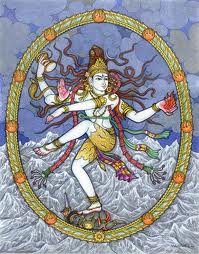
Lord Shiva Nataraja, The Cosmic Dancer

One day, my teacher was answering a fellow student’s question and he remarked about how our egos are “…dancing with Maya.” Maya, a Sanskrit term, loosely means ‘illusion.’ It is really our perception of what is real that is illusion. What we see as real is merely the manifestation of the One Reality. However, we perceive our physical world, including ourselves, as separate from the One Reality or God. The truth is that there is no separation. The idea of separation is the illusion.

I’ve used this analogy before, but if you remember the TV show Star Trek Voyager, the crew was able to entertain themselves on the holodeck. This was a place where various holographic worlds were created and story lines played out with the crewmembers acting out roles. While they were in the story, everything seemed perfectly real to them.  But, of course, none of it was. So, while we think of the world we live in as real, which it isn’t – physicists say reality is more holographic in nature -we, our egos that is, are merely characters in a play acting out a script on the world stage.

In the first Matrix movie, Morpheus continually tries to show Neo who he really is – or isn’t, which is Thomas Anderson living a tedious life within the confines of a computer generated ‘reality.’  Through a number of experiences, Neo is freed from the limited perceptions of his mind and by the end of the movie knows the truth. He sees the physical world as the computer generated illusion and therefore knows that the bullets that are meant to kill him are not real.

The reason we can’t accept the world as illusion is because we don’t see that the material ‘stuff’ the world is made of is not ‘stuff’ at all. Physics has proven that nothing is solid.  What’s more, the kinetic theory of solids, liquids and gases tells us that nothing is static, which means the ‘particles’ that make up matter are always in motion.  However, these ‘particles’ of matter are atoms and when you look at atoms you will find that subatomic matter is not matter at all but energetic patterns. Physicist and author Fritjof Capra in his book, the Tao of Physics, says, “…the constituents of matter and the basic phenomena involving them are all interconnected, interrelated and interdependent; that they cannot be understood as isolated entities but only as integrated parts of the whole.” He goes on to say that “…particles are processes rather than objects,” and that, “…subatomic matter is continually creating and destroying itself through the emission and absorption of virtual particles.”

We are witness to this creation and destruction all the time. The change of seasons is a perfect example. Also, we recognize the impermanence of our world in the rise and fall of civilizations throughout history, as well as the birth and death of stars and other universes.

Eastern mysticism sees creation, perpetuation and destruction in the universe as the dance of Lord Shiva Nataraja (pictured above).  It is Shiva’s dance that sustains the universe. From a physics standpoint, this is an elegant explanation of the continuous ‘dance’ of the interconnected patterns of energy that we perceive as the material world. Fritjof Capra goes on in his book, the Tao of Physics, to explain the details of this metaphorical representation as follows:

“The upper right hand of the god holds the drum to symbolize the primal sound of creation, the upper left bears a tongue of flame, the element of destruction. The balance of the two hands represents the dynamic balance of creation and destruction in the world accentuated further by the Dancer’s calm and detached face in the center of the two hands, in which the polarity of creation and destruction is dissolved and transcended. The second right hand is raised in the sign of ‘do not fear’, symbolizing maintenance, protection and peace, while the remaining left hand points down to the uplifted left foot, which symbolizes release from the spell of maya. The god is pictured as dancing on the body of a demon, the symbol of human ignorance which has to be conquered before liberation can be attained.”

Our perception of a material-based reality keeps us blind to the truth and bound to the rhythm of birth and death and rebirth powered by karma, which means ‘action.’  The bonds of karma (action) are broken only when we recognize that we, and all that we experience, are not separate from the One Reality or God, but are part of it. When that happens moksha or ‘liberation’ is the result.

Until then, keep your dancing shoes on…..

The Sound of Silence

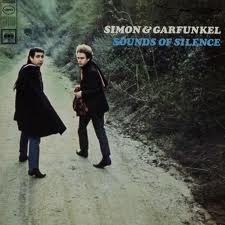
“Hello darkness my old friend ……..” is the opening line of Simon and Garfunkel’s famous song The Sound(s) of Silence.” I enjoyed listening to the duo’s music in the second half of the ‘60’s, as it appealed to my poetic sensitivities.

Of course, the song title’s meaning for me has changed over the decades. The more I delve the depths of reality, the more I crave those sounds of silence, because that’s where it’s happening. That’s where the action is. Action in inaction? Sounds in silence?  Yes, reality is full of paradoxes, but one thing is for sure: the volumes of information conveyed or found in the silence when you contemplate/meditate is astonishing and the ways in which truth (information) is communicated is unique to each person.

There is a saying that meditation can’t be taught, but it can be learned. Though there are many different kinds of meditation, the method is only the tool, the map, to help the seeker reach those states of quiet. The silence and what is learned in the silence is the journey. It’s like walking a labyrinth. The path is set (in stone) but the journey is unique to each who walk it. The first time I walked a labyrinth, which, by the way, is done in complete silence, I was astounded by the ‘impressions’ that were brought into my awareness.  And each time I’ve walked a labyrinth, the journey has been different.

Labyrinth at the National Headquarters of the Theosophical Society in America

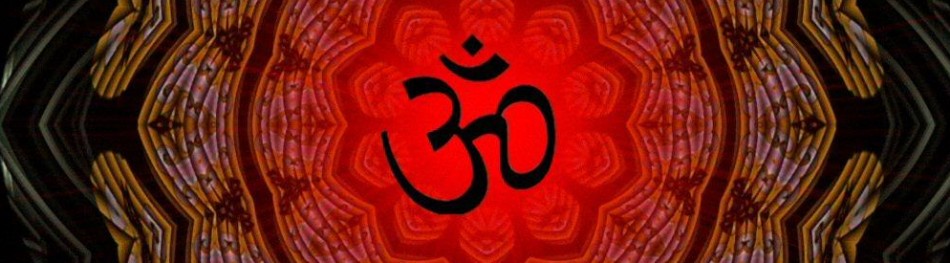
When you chant the Omkara, which is simply chanting “OM” in repetition, you focus on two things. You can put your attention on the sound of the OM vibration, but things get much more interesting when you put your attention on the space between the OMs. In yoga, pranayama or breathing exercises also emphasize the interval between breaths as the more important place to be.

The importance of silence in sadhana cannot be stressed enough. This is the place where the seeker touches the face of the Absolute, because it is in the silence where you find yourself.  It’s not even the noise of the external world that’s the problem; it’s the noise of your internal world that needs to be turned down in order for your ego to be pushed aside so you can be with yourself for a while.  And that’s when real learning or experiencing begins. You will never find the answers to the eternal questions you search for in books. Never. It is only by turning within, by spending time in the silence, that you will discover who you really are. The first line in Eckhart Tolle’s Stillness Speaks says, “When you lose touch with inner stillness, you lose touch with yourself. When you lose touch with yourself, you lose yourself in the world.”

There’s a lot of resistance to living in silence even if it’s only for a few minutes at a time.  Silence can be scary for us. We don’t know what to do with it because silence has no form. Having lost the anchor of the material world, we feel adrift with nothing in the void to cling to. The realization sinks in that our beliefs and thoughts about who we are don’t matter in this place. Those false identities are negated in the formless essence of stillness. The illusion of separation dissolves and in the silence we realize that we are the “…I Am that is deeper than name and form…” as Eckhart Tolle writes.  It’s the difference between ‘doing’ and ‘being.’

Spiritual literature about this abounds. If interested, a couple of titles you should check out include:  The Voice of the Silence by H.P. Blavatsky and the aforementioned Stillness Speaks by Eckhart Tolle. Both are excellent, though if you’re a beginner in these matters, I would start with Tolle’s book as Blavatsky’s is more esoteric.


No Strings Attached


It’s been about 2 years since I cancelled my landline. I remember that, while I was so completely fed up with the phone company (it doesn’t matter which one they’re all the same), I was actually fearful of cutting that cord. Even though I had my cell, I felt insecure, as if I were 2 years old and my blankie was being taken away.  This may sound foolish to those of you out there who are younger and don’t have the memory of dialing a princess phone while yelling at your sibling to get off the extension. This attachment went really deep. But then, the younger generations have their own attachments to their iphones, ipods, etc.  An attachment is an attachment.

Look around your environment and try to gauge your level of attachment to what you consider yours, what you ‘own.’ Ask yourself, “How would I feel if I lost this?”  Would you be okay without that possession (or person, or job) or would you feel diminished without it? This implies that our attachments, whether they are to things, people or jobs, fill a deep, dark hole we perceive in ourselves. Krishnamurti said, “The object of attachment offers me the means of escape from my own emptiness.” This is not to say that you can’t enjoy what you have; true detachment means you can savor those pleasures as long as you don’t rely on them to make you happy or define who you are.

I had this experience nine years ago when my apartment was broken into. I lost my laptop, camera, and lots of jewelry, including a gold charm bracelet I had since I was kid and a pink diamond that belonged to my mother. I was heartbroken. When I told my teacher what had happened, he told me how sorry he was but then he said, “I guess you had a chance to see your attachments.”  From time to time, my ego still feels the emotional pinch of what it lost, even though “I” know they don’t define who “I” am.  My ego needs its props, I don’t. What I lost wasn’t the basis for my happiness.

As I get older, I find that I really don’t need very much to live my life comfortably. My identity relies less on externals these days.  I wonder what it would be like to give up my possessions and rent a furnished apartment. I imagine taking a pair scissors and cutting the cords that tie me to my material life. There is a sense of complete freedom that descends upon my being, as the simplicity of that reality attracts me.  Imagine not being encumbered by the trappings society deems essential? You would have so much less to worry about, since the struggle of keeping what you have disappears. Sounds like a good place to be. I’m not there yet, but someday I hope to be.

Finding Truth Beyond Belief

As I’ve blogged before, I’m consumed with finding Truth.  I was raised Catholic – went to Catholic schools for the first 12 years of my education. That’s a lot of religion. Thinking back, I never really questioned my faith – my beliefs. There were loopholes in the dogma I was being taught – plenty of them – and I did question those as I got older, but I was stuck in blind belief. Also, I figured that science would eventually answer all of my questions. I was looking for that bridge between science and religion that I knew was there but was in no position to find.  I was trying to find the Truth through thought – through the manipulations of my mind.

I look around me and all I see is struggle. That struggle spurs some of us to seek what is real, what is true. But just like love, we end up searching for it in all the wrong places. When we think we find a piece of truth, usually in whatever religion we adopt, it is often shrouded so thickly in doctrine, dogma and ritual that we fail to recognize its essence. Don’t misunderstand me – at their core all religions contain truth. But you can make a choice between “blind belief of truth” or “truth beyond belief.”

Below is a quote that I found in my inbox. I subscribe to JKrishnamurti online and receive a quote from the Krishnamurti archives each day. This one particularly struck me so I wanted to share it with all of you.  Click here for more info: www.jkrishnamurti.org/

“We realize that life is ugly, painful, sorrowful; we want some kind of theory, some kind of speculation or satisfaction, some kind of doctrine, which will explain all this, and so we are caught in explanation, in words, in theories, and gradually, beliefs become deeply rooted and unshakable because behind those beliefs, behind those dogmas, there is the constant fear of the unknown. But we never look at that fear; we turn away from it. The stronger the beliefs, the stronger the dogmas. And when we examine these beliefs the Christian, the Hindu, the Buddhist we find that they divide people. Each dogma, each belief has a series of rituals, a series of compulsions which bind man and separate man. So, we start with an inquiry to find out what is true, what the significance is of this misery, this struggle, this pain; and we are soon caught up in beliefs, in rituals, in theories. Belief is corruption because, behind belief and morality lurks the mind, the self the self growing big, powerful and strong. We consider belief in God, the belief in something, as religion. We consider that to believe is to be religious. You understand? If you do not believe, you will be considered an atheist, you will be condemned by society. One society will condemn those who believe in God, and another society will condemn those who do not. They are both the same. So, religion becomes a matter of belief and belief acts and has a corresponding influence on the mind; the mind then can never be free. But it is only in freedom that you can find out what is true, what is God, not through any belief, because your very belief projects what you think ought to be God, what you think ought to be true.” – J. Krishnamurti, The Book of Life

Oh, Those Kodak Moments

The Times of Your Life...

As I watched the ball drop on New Year’s Eve, I reflected on the nature of impermanence. It’s so obvious at a moment like that since that moment, the change from one year to the next, is separated out and celebrated. We all know it passes never to be experienced again. That acknowledgement is a useful tool for us. It can help us understand the transitory nature of this so-called reality in which we live. But that’s not always what we want. Like Paul Anka singing “The Times of Your Life” we cling to our Kodak moments yearning for what is no more. The question is why?

Maybe it’s because our perception of the past as “the good ‘ol days” clouds what we are experiencing in the present. But the present is always on it’s way to becoming the past. See the problem? Still, we find comfort in the past – its outcome is already known, we’ve gotten through it, it gives us pleasure, we can re-visit loved ones who are now gone etc. We can’t say that about the future. The future is unknown and the unknown is always scary for us. So, between reliving the past (whether good or bad) and worrying about the future, we lose sight of where we are – the present.

Those Kodak moments also give us a glimpse of something else at work in our lives – attachment. When we experience nostalgia, we experience attachment: a longing for something that is no more. Also, we experience attachment when we plan for our future Kodak moments because we are attached to how we think the future should turn out.

Buddhism speaks of the interrelatedness between impermanence and attachment. The fear of losing something or someone makes us hold onto it more strongly. All of our energy is channeled into protecting what we have because we feel our possessions and relationships define who we are. Just ask anyone who has been dealing with the effects of the current economic crisis. They have been given a unique opportunity (although I’m sure they don’t look at it that way right now) to see their attachments and how their identity is wrapped up in all things external. It’s only when we can detach from our attachments in any given moment do we glimpse our true identity.

To understand impermanence is to embrace the present moment. When we are truly present, we live in that space that is free from attachment. We don’t mourn the past or fear the future. In the present moment there is no past or future, only the eternal now.